
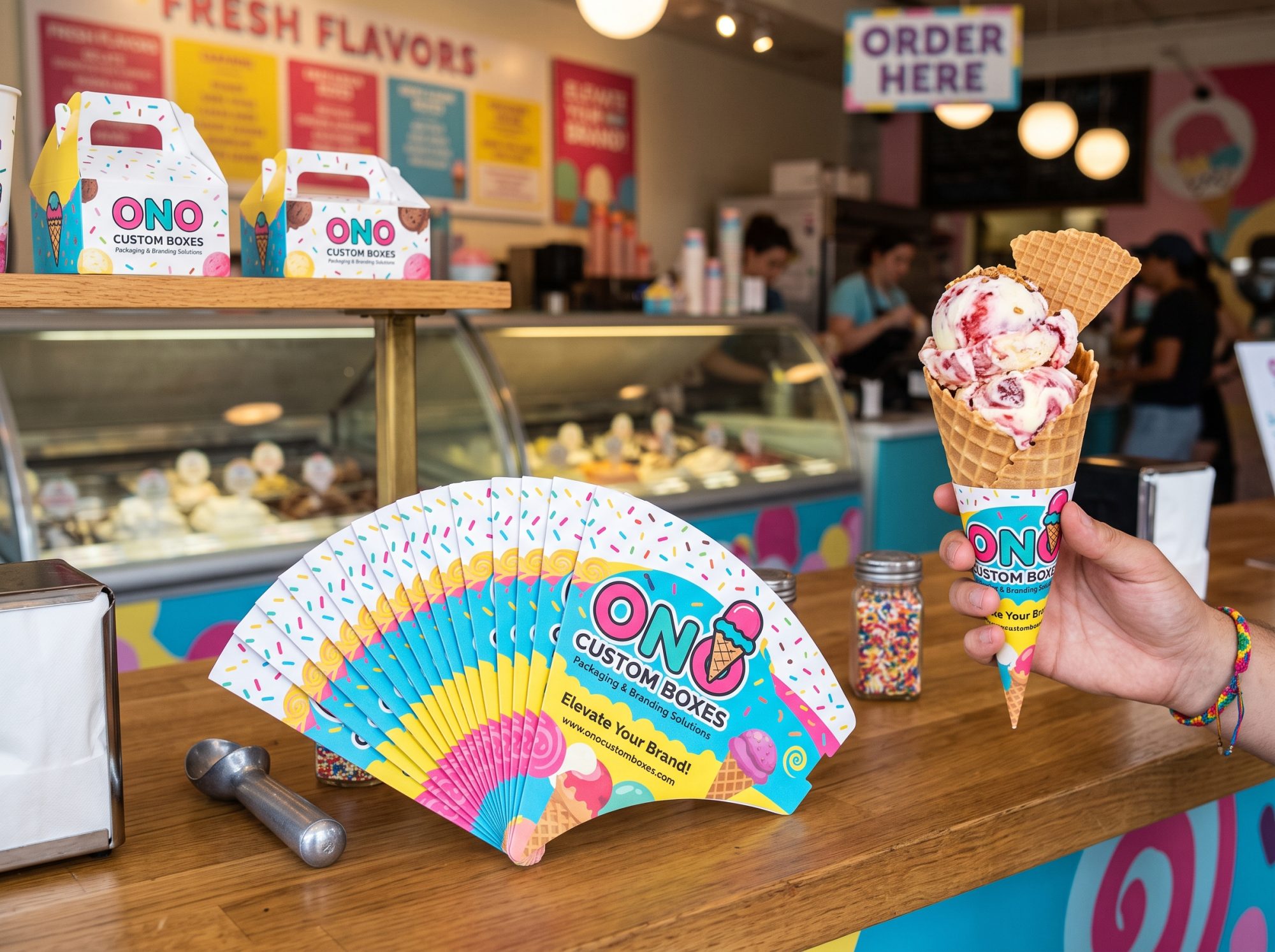
Custom cone sleeves cost roughly 4 to 12 cents each at wholesale volumes, yet every sleeve puts your logo in a customer’s hand for the 8 to 15 minutes it takes to finish a cone. For a shop selling 200 cones a day, that is about 6,000 branded impressions a month for less than the price of a single boosted social post.
Ice cream shops run on thin margins and short seasons. Every dollar you spend has to work twice. That is exactly why custom cone sleeves deserve a second look from any owner who thinks of them as a napkin substitute.
A cone sleeve is not just a grip. It is a small piece of branded packaging that travels. It walks out your door, down the sidewalk, into a photo, and sometimes into a social feed. Very few marketing tools follow a customer around like that.
The Math Most Shops Never Run
Let us keep this simple. Say you sell 200 cones a day across a 150-day season. That is 30,000 cones.
At 6 cents per sleeve, your annual packaging cost for sleeves is about $1,800. Now compare that to what else $1,800 buys:
| Marketing Channel | Cost | Impressions | Cost per 1,000 Impressions |
|---|---|---|---|
| Custom cone sleeves | $1,800 | 30,000 held + bystanders | ~$60 or less |
| Local radio spot | $1,800 | Varies, passive | Often $15–$40 |
| Printed flyers | $1,800 | ~20,000 (most discarded) | ~$90 |
| Paid social boost | $1,800 | Scrolled past in 1.7 seconds | Varies widely |
The cone sleeve number looks average until you add one thing radio and flyers cannot offer: dwell time. Nobody holds a flyer for twelve minutes. Nobody smiles while looking at a radio ad. Your sleeve gets held, looked at, and photographed during a genuinely happy moment. That emotional context is worth more than raw reach.
Sleeves Solve a Real Problem First
Good marketing never feels like marketing. Cone sleeves work because customers actually want them.
Melting ice cream runs down the cone. Waffle cones flake. Hands get sticky. A sleeve fixes all three. It gives the cone structure, catches the first drips, and keeps sugar off the fingers.
That means your branding rides along with a genuine service. Customers do not throw the sleeve away in annoyance the way they toss a flyer. They keep it until the last bite. This is the difference between interruption marketing and utility marketing, and utility wins every time.
Design Choices That Actually Get Noticed
Most sleeves waste their space. Here is what works instead.
Put the logo where the thumb is not. Customers grip the lower third of the sleeve. Push your logo and name to the upper band so it stays visible while held.
Use one bold color, not five. A single saturated background with reversed white type reads from across a park. Busy artwork turns to mush at arm’s length.
Add your handle, not your whole address. Nobody types a street address off a sleeve. They will, however, tap an Instagram handle. Print it large and simple.
Leave breathing room. White space makes a small surface look premium. Cramming a phone number, hours, website, three social icons, and a slogan onto a sleeve makes it look like a coupon.
Consider a seasonal run. A pumpkin design in October or a heart pattern in February gives regulars a reason to photograph the same product twice.
The Photo Effect Nobody Budgets For
Ice cream is one of the most photographed foods on the internet. Cones especially. People hold them up against a sky, a mural, or a beach.
When your sleeve is in that frame, you get a user-generated impression you did not pay for and could not have staged. A plain white sleeve gives you nothing. A well-designed one turns every customer into a small, willing billboard.
Shops that lean into this often add a simple hashtag or a short phrase to the sleeve. It costs nothing extra on the print run and gives customers a caption prompt.
Ordering Without Overcommitting
The most common worry is minimum order quantity. Owners hear «custom printing» and picture a pallet of 50,000 sleeves in the stockroom.
That fear is mostly outdated. Many packaging suppliers now run digital printing alongside traditional offset, which brings minimums down considerably for small shops. Digital works well for shorter runs and seasonal designs. Offset becomes cheaper once you cross into higher volumes.
A practical approach for a first order:
- Order a modest quantity of a single evergreen design that works year-round.
- Ask for a physical sample or printed proof before the full run.
- Track how long the stock actually lasts through one busy month.
- Use that real number to size your next order and negotiate better pricing.
Suppliers such as ONO Custom Boxes and other wholesale packaging printers can quote both digital and offset so you can compare the break-even point yourself.
Do Not Skip the Food-Safety Part
A cone sleeve touches food. That makes it food-contact packaging, not just printed paper.
Ask any supplier three questions before you order:
- Are the inks food-safe and suitable for direct contact?
- Is the stock PFAS-free? Several states now restrict intentionally added PFAS in paper food service items, and sleeves are specifically named in some rules.
- Can you provide a certificate of compliance?
A supplier who answers these clearly is a supplier worth keeping. One who dodges them is a liability you do not need.
Frequently Asked Questions
How much do custom cone sleeves cost?
Typically 4 to 12 cents each depending on quantity, stock, and print method. Higher volumes and simpler designs push the price toward the low end.
What size sleeve do I need?
Match the sleeve to your cone. Standard sugar and cake cones use a narrower sleeve than jumbo waffle cones. Send your supplier a sample cone or its exact top diameter.
Can I print on recycled or compostable stock?
Yes. Recycled kraft and compostable cone sleeves are widely available and often become part of the brand story for shops with eco-minded customers.
How long does production take?
Digital runs commonly ship in about a week after proof approval. Offset runs take longer. Order your summer stock in early spring.
Are sleeves worth it for a single-location shop?
Often yes, because the cost per impression stays low even at small volumes and the sleeve solves a real customer problem at the same time.