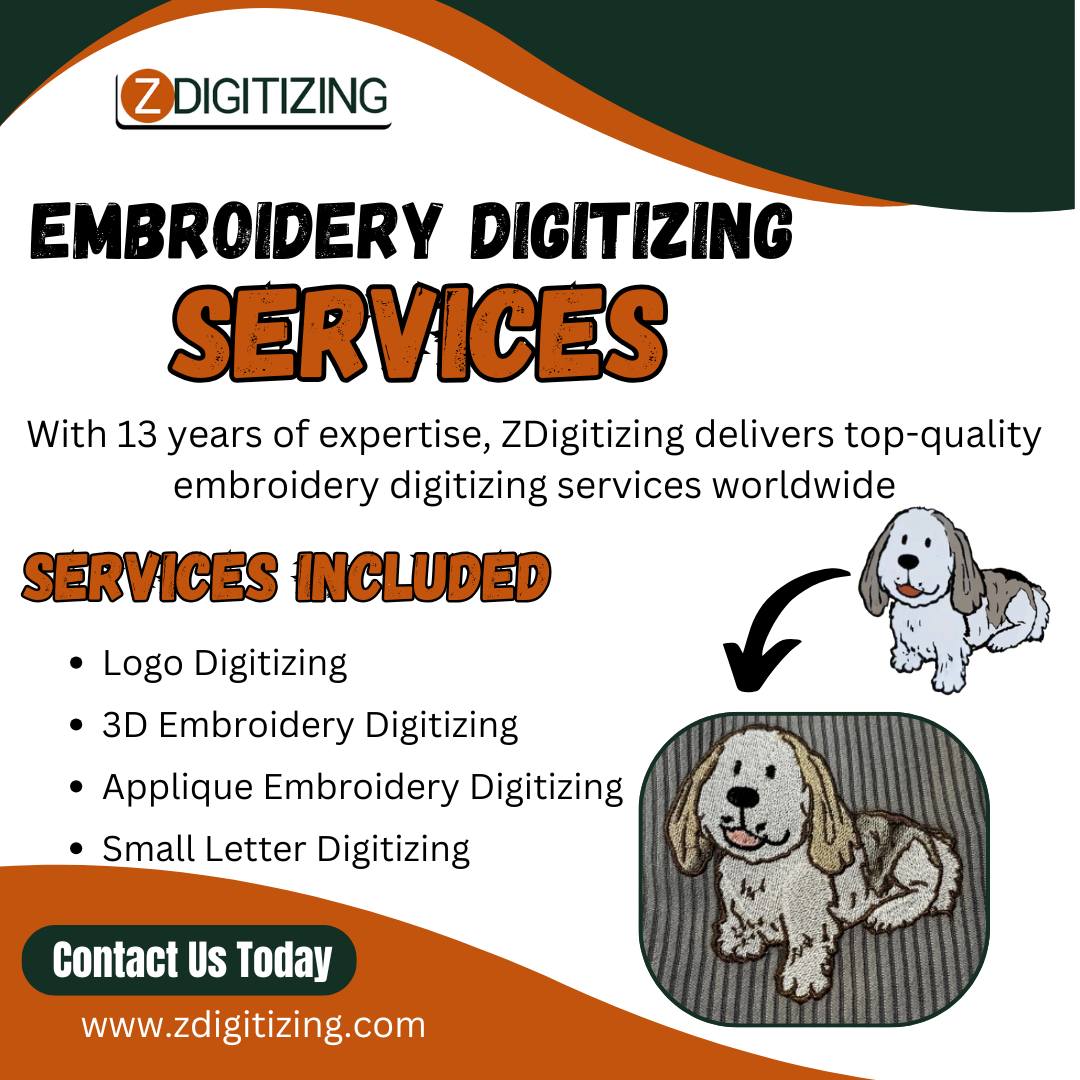
Embroidery adds a professional and personalized finish to clothing, uniforms, caps, bags, workwear, and promotional products. However, producing clean and consistent embroidery requires more than converting an image into a digital file.
Professional embroidery digitizing converts artwork into a machine readable format that contains detailed instructions for stitch placement, direction, sequence, density, and other technical elements.
For businesses, apparel brands, promotional product providers, and individuals, choosing a reliable best online embroidery digitizing service in USA can help improve production quality and reduce avoidable embroidery problems. The right service should combine technical knowledge, accurate digitizing, suitable file formats, responsive communication, and dependable turnaround times.
What Is Embroidery Digitizing?
Embroidery digitizing is the process of converting artwork, logos, lettering, or graphics into a format that an embroidery machine can read. Common embroidery files include DST, PES, JEF, and EXP, although the appropriate format depends on the embroidery machine being used.
Unlike a standard image, an embroidery file contains instructions that control how the machine creates the design. These instructions determine stitch types, stitch direction, sequence, density, underlay, and color changes.
A professional digitizer evaluates the original artwork and adapts it for embroidery production. Factors such as fabric type, design dimensions, lettering size, and the level of detail can affect how the final embroidered product looks.
Why Choose an Online Embroidery Digitizing Service?
Online digitizing services provide a convenient way to submit artwork without visiting a physical location. Customers can upload their designs, provide production requirements, and receive completed embroidery files electronically.
This approach can be useful for both occasional and regular embroidery projects. A small business may need a logo digitized for uniforms, while an apparel producer may require multiple designs for different products. An online service can provide a streamlined workflow for both situations.
Online communication also makes it easier to discuss design specifications, request adjustments, and share production details before the embroidery process begins.
How to Get Better Results From Your Digitized Design
The quality of the original artwork and the information provided to the digitizer can influence the final result. Customers should submit the clearest available version of their artwork and provide relevant production details.
Vector artwork can be useful because it generally provides clean shapes and defined elements. However, professional digitizers can often work with other file types, including JPG, PNG, and PDF files.
It is also important to explain where the design will be embroidered. A design intended for a cotton shirt may require different settings from one intended for a cap, jacket, denim garment, or performance fabric.
The intended embroidery size should also be communicated. A logo designed for a large jacket back may need different treatment when reduced for a small chest placement.
How to Choose Right Online Embroidery Digitizing Service
Before selecting a provider, review its portfolio to understand the quality and variety of previous work. Check whether the provider supports the embroidery file format required for your machine and ask about turnaround times.
It is also helpful to understand the revision policy before submitting an order. Clear pricing and communication policies can reduce misunderstandings.
For businesses with recurring requirements, consistency is another important consideration. Designs should maintain reliable stitch quality across repeated production runs.
Frequently Asked Questions
What file format is best for embroidery?
There is no single file format that is best for every embroidery machine. DST, PES, JEF, and EXP are among the commonly used formats. The correct choice depends on the machine and software being used.
Can a JPG or PNG image be converted into an embroidery file?
Yes. Professional digitizers can often use JPG, PNG, PDF, and other artwork formats as the source for digitizing. The artwork may need adjustments because embroidery requires stitch based construction rather than pixels.
How long does embroidery digitizing take?
Turnaround depends on the design’s complexity, required file format, revision needs, and the service provider’s workload. Simple designs may require less time, while detailed artwork can require additional preparation and review.
Does every design work well for embroidery?
Not every design can be reproduced exactly as shown on a screen. Very small details, thin lines, tiny lettering, and complex color transitions may need to be modified to work effectively with embroidery.
Final Thoughts
Choosing an online embroidery digitizing service in the USA requires attention to technical quality, experience, file compatibility, turnaround time, customer support, and revision policies. A professional digitizer does more than convert artwork into stitches. The process involves adapting the design to the fabric, embroidery size, machine requirements, and physical characteristics of thread.
Businesses and individuals can improve their results by submitting clear artwork, explaining the intended application, confirming the required file format, and reviewing the provider’s portfolio and policies before ordering. Taking these steps can make the digitizing process more predictable and help produce clean, consistent embroidery suitable for apparel and promotional products.